

Drone Warfare in Sudan
Over the past month, drones in Sudan have shifted from an auxiliary tool to a central weapon of the civil war. Both the RSF and the SAF routinely deploy small armed and reconnaissance drones for targeted strikes, sieges, and harassment of supply lines; the pattern shows drones being used against airports, displacement camps, power and water infrastructure, and resource sites. External supplies and the documented flows of platforms and components from regional suppliers have increased the operational tempo and lethality of these systems. UN and humanitarian sources warn that the rise in drone attacks is magnifying civilian casualties and blocking relief efforts, while both sides increasingly claim successes in intercepting hostile drone swarms.
Overview of the Conflict in Sudan
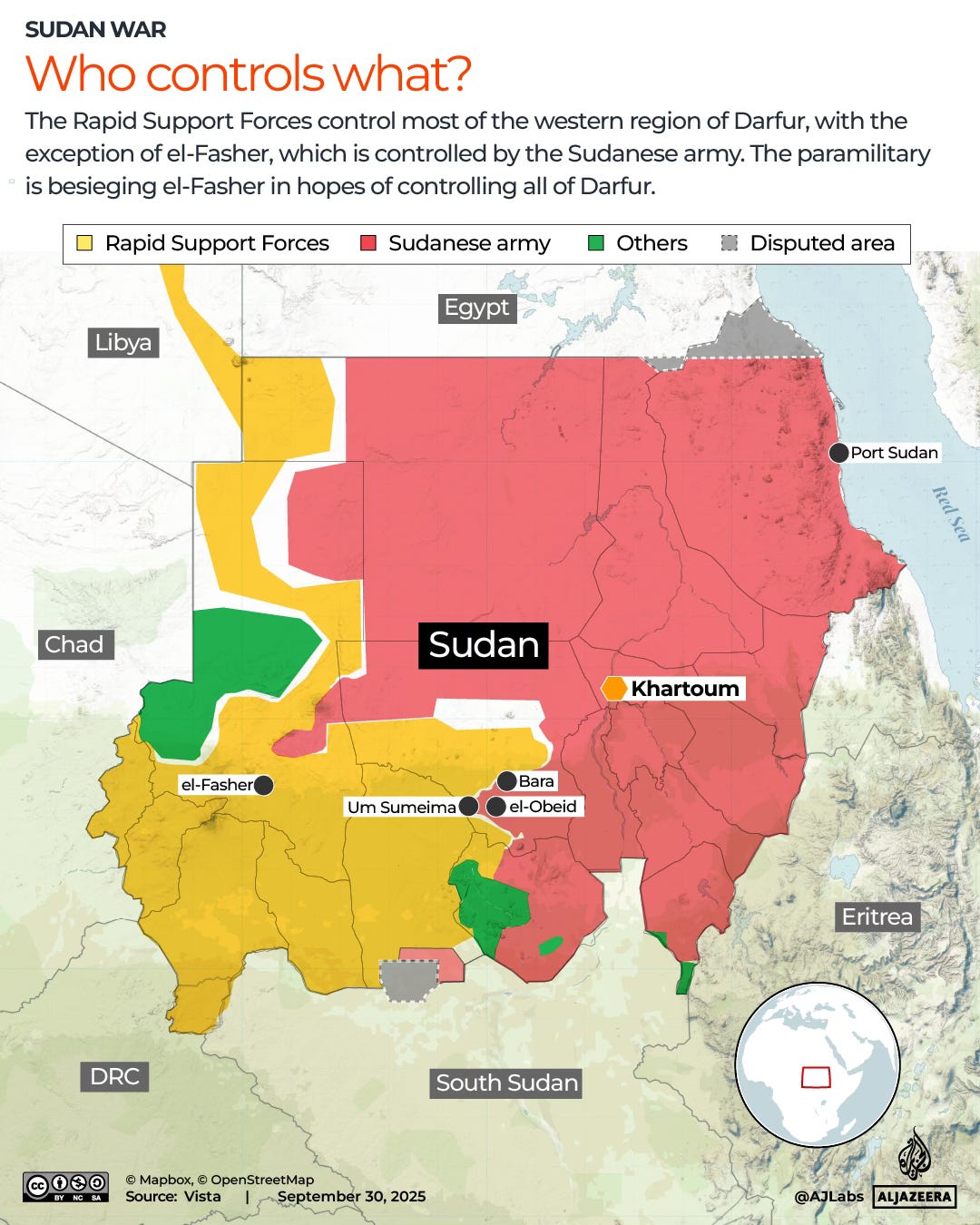
The war in Sudan began in April 2023 when fighting broke out between the Sudanese Armed Forces (SAF), led by Gen. Abdel Fattah al-Burhan, and the Rapid Support Forces (RSF), a powerful paramilitary group commanded by Mohamed Hamdan Dagalo, widely known as Hemedti. The two factions had jointly overthrown Sudan’s transitional government in a 2021 coup. Still, disputes over integrating the RSF into the national army, control of security forces, and political power triggered a violent split.
The conflict quickly spread across the country. The RSF seized large portions of Khartoum, much of Darfur, and key economic corridors, using mobility, decentralized command, and local alliances to hold cities and neighborhoods. The SAF retained strongholds in Port Sudan and parts of the east and north, relying heavily on airpower, artillery, and external military support.
Civilian areas have been devastated. Cities like Khartoum, Omdurman, and El Geneina have seen mass displacement, widespread looting, ethnic massacres, and the collapse of basic services. The UN estimates that the war has triggered one of the world’s most significant humanitarian crises, with millions displaced internally and across borders.
Foreign involvement has deepened the conflict. Regional powers have supplied weapons, drones, and funding to one or both sides, amplifying their ability to sustain long campaigns. The RSF has reportedly benefited from equipment and financial backing from actors in the Gulf region, while the SAF has sought support from Egypt and other partners. This external dimension has prolonged the war and increased the sophistication of battlefield tools, including the growing use of drones by both factions.
As of late 2025, neither side holds a decisive advantage. The RSF maintains territorial control in major urban centers, while the SAF continues to control national institutions and coastal access. Peace talks have repeatedly stalled, and ceasefires have broken down within days. Mediation efforts by the African Union, the United States, and regional blocs have failed to halt fighting or stabilize humanitarian routes.
The conflict has transformed into a multi-front struggle featuring urban warfare, ethnic violence in Darfur, battles for gold-producing regions, and increasing drone strikes on military and civilian infrastructure. Without a political breakthrough, Sudan risks prolonged fragmentation, deepening humanitarian collapse, and further militarization by armed groups aligned with either faction.
Key Drone Warfare Developments in Sudan:
21 October 2025 — Drone strikes threaten Khartoum airport reopening
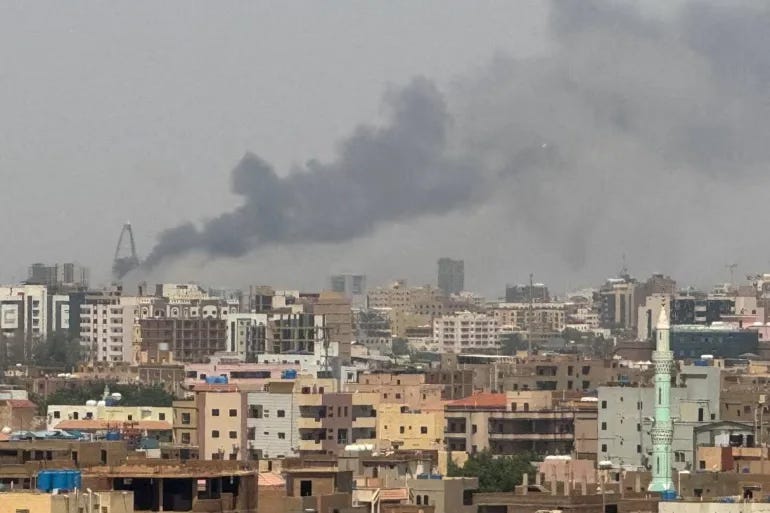
On 21 October, early-morning explosions near Khartoum International Airport disrupted plans to reopen the facility by damaging perimeter areas and forcing authorities to delay civilian flights. Witnesses said multiple small drones were involved, and local officials warned the airport remained unsafe as fighting between the Sudanese Armed Forces (SAF) and the Rapid Support Forces (RSF) continued nearby.
11 October 2025 — Deadly RSF drone and artillery strike on El Fasher displacement camp
In early October, a combined drone and artillery assault by RSF elements killed scores of displaced civilians at the Dar al-Arqam shelter in El Fasher, North Darfur, hitting a university campus refuge and overwhelming medical responders. Local aid groups and hospitals reported many children and women among the dead and wounded, and humanitarian groups say the attack deepened an already catastrophic protection crisis.
24 October 2025 — UN expert warns of escalating drone attacks on civilians
On 24 October, the UN human-rights expert in Sudan issued a public alert about a sharp rise in drone strikes that are increasingly striking civilian sites—including hospitals, markets, and displacement camps—urging all parties to protect noncombatants and allow humanitarian access. The statement cited multiple recent incidents and called for investigations into potential war crimes.
Early–Mid November 2025 — Army intercepts drone swarms and reports RSF strikes on infrastructure
Across early to mid-November, the Sudanese army said its air defenses intercepted swarms of drones aimed at Khartoum and northern towns such as Atbara. In contrast, separate army statements accused the RSF of launching strikes on dams and strategic cities in the north. Both sides reported using small reconnaissance and attack drones alongside artillery, intensifying risks to civilians and electricity and water infrastructure.
9 November 2025 — Evidence of continued external drone supplies to RSF
Open-source investigators and monitoring groups documented ongoing flows of foreign military equipment—including armed drones and parts—into RSF hands, with analysts pointing to the UAE (and earlier reporting flagging Turkish systems) as sources that have materially altered battlefield dynamics. Observers say those supplies have enabled the RSF to sustain prolonged sieges and conduct strikes deep into contested urban areas.
16 November 2025 — Suspected army drone strike kills miners at northern site
On 16 November, a suspected Sudanese army drone struck a gold-mining site in the north, killing at least ten people and injuring dozens; local reports said the area has seen repeated raids as armed groups and the military contest resource sites. The strike underlines how drones are being used not just against military targets but in resource-driven clashes that worsen civilian harm and displacement.
Outlook — what to watch in Sudan
More strikes on civilian and economic infrastructure (airports, dams, mining sites) as both sides seek leverage.
Continued reliance on foreign supplies will shape which faction holds drone superiority in different regions.
Worsening humanitarian access and protection gaps, with independent investigations into attacks on shelters and hospitals likely to continue.
Increased interest in low-cost countermeasures (local air defenses, electronic warfare) by both sides and international actors if the violence further escalates.
Thanks for reading Dronefare. Follow us on LinkedIn and subscribe to stay up-to-date on the latest developments in drone warfare.