

UK Navy launches new crewless helicopter to counter North Atlantic threats
The UK Royal Navy flew its first full-size autonomous helicopter, named Proteus, in a short test last week. The aircraft has no pilot on board and uses onboard sensors and software to interpret its environment. The Navy said it built Proteus to help track submarines, patrol the seas, and perform missions without risking aircrews. The project cost about £60 million.
Why it matters: For drone enthusiasts and security watchers alike, it signals a future where crewless aircraft take on mission roles that would once have required humans.
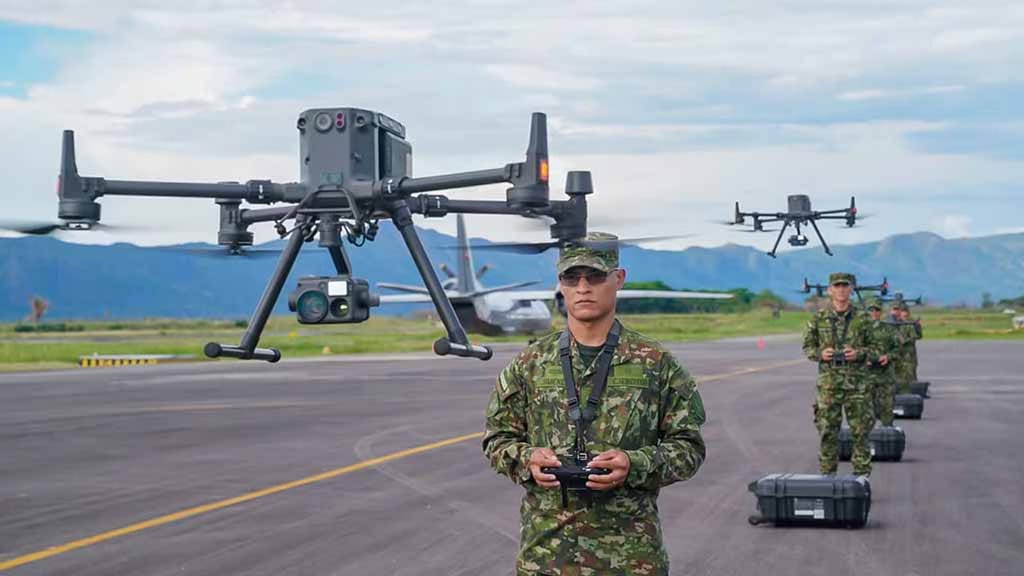
Colombia to launch $1.7 billion anti-drone shield
Colombia launched a $1.68 billion “anti-drone shield” project to protect the country from unmanned threats used by criminal groups. The defense minister called it one of the most innovative steps in national security. The plan aims to build systems that detect and counter drones flying over key areas.
Why it matters: This is one of the first large-scale national efforts in Latin America focused on drones as a homeland security issue, not just a military one. Criminal groups have increasingly used drones for surveillance or attack, and Bogotá responded with a modern counter-drone strategy. Expect this model to influence other countries facing similar hybrid threats.
Officials said the shield would combine several layers of defense. These included early-warning sensors to detect drones, electronic tools to disrupt control signals, and physical interceptors to stop drones that penetrated protected airspace. A central command structure would link these elements and coordinate responses across the armed forces and national police.
The government framed the project as a response to the growing use of modified commercial drones for surveillance, smuggling, and attacks by armed groups. Security officials said those threats had spread beyond rural conflict zones into cities and strategic facilities, forcing the state to treat drone defense as a core national security task rather than a niche military capability.
More broadly, this marks a shift in Colombia's approach to airspace security. Instead of relying on isolated systems or temporary deployments, the country looks committed to a permanent, nationwide counter-drone architecture, alongside expanded training and closer coordination between civilian and military authorities.
Haiti struck gang leaders’ homes in a drone-assisted operation
Haitian security forces bombed three homes tied to notorious gang leader Jimmy “Barbecue” Cherizier in Port-au-Prince. Local media shared footage of a large explosion and smoke filling the area. Police then entered the neighborhood and recovered suspected gang equipment.
Why it matters: Haitian forces and international partners used drone-delivered explosives and coordinated ground operations, showing how even in internal security operations, drones are becoming part of state responses against powerful criminal groups.
Thanks for reading Dronefare. Follow us on LinkedIn and subscribe to stay up-to-date on the latest developments in drone warfare.