

China’s Underwater Drone
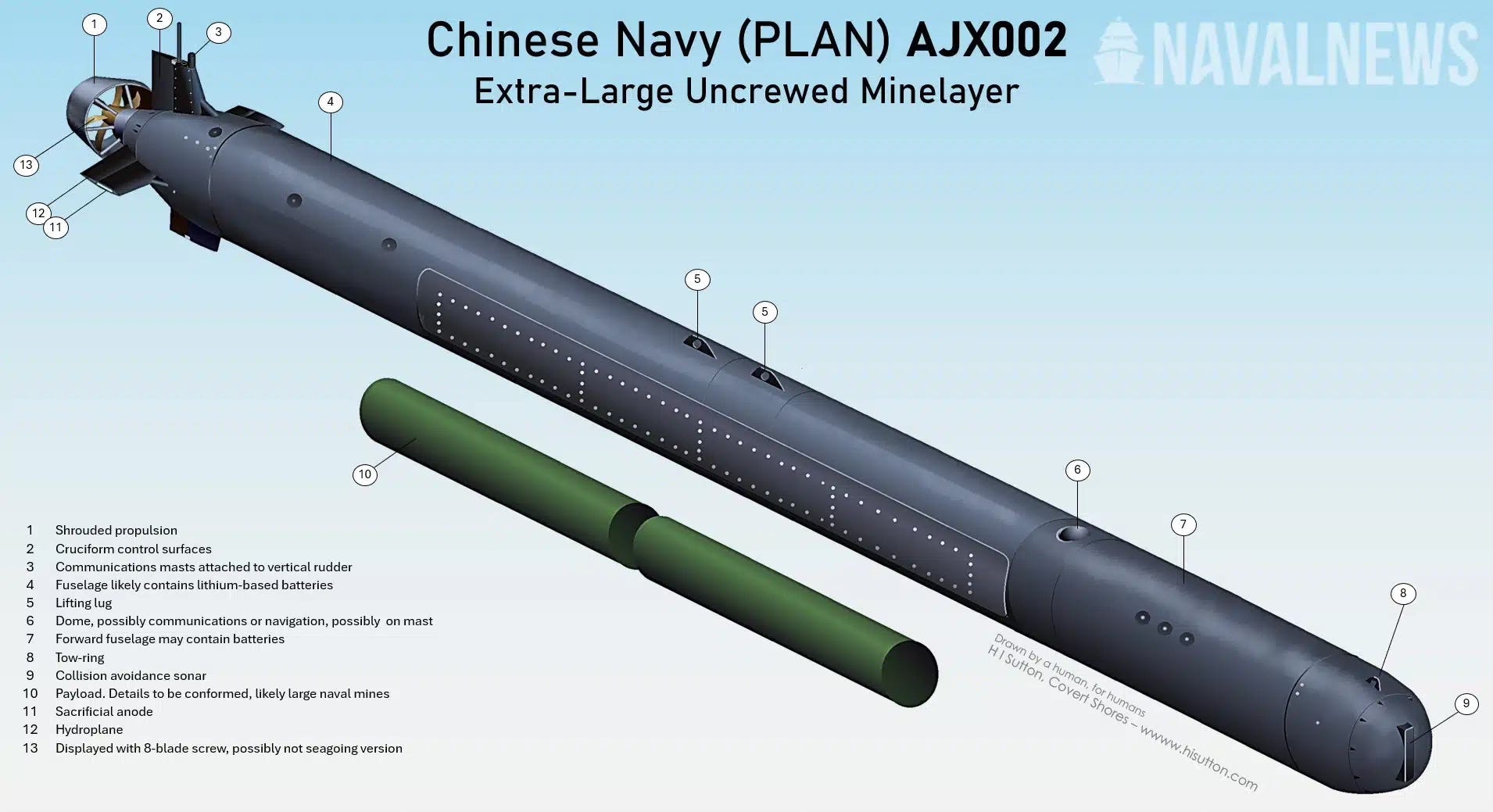
In early September 2025, China unveiled a new extra-large underwater drone, the AJX002, during a military parade in Beijing. The underwater drone was designed specifically for laying naval mines.
The AJX002 is roughly 20 meters long, with a streamlined hull optimized for carrying batteries and payloads rather than maneuverability. Naval analysts suggest that the drone could have a range of over 1,000 nautical miles, enabling it to deploy mines beyond Taiwan’s immediate coastal waters. This development could significantly alter the strategic balance around Taiwan.
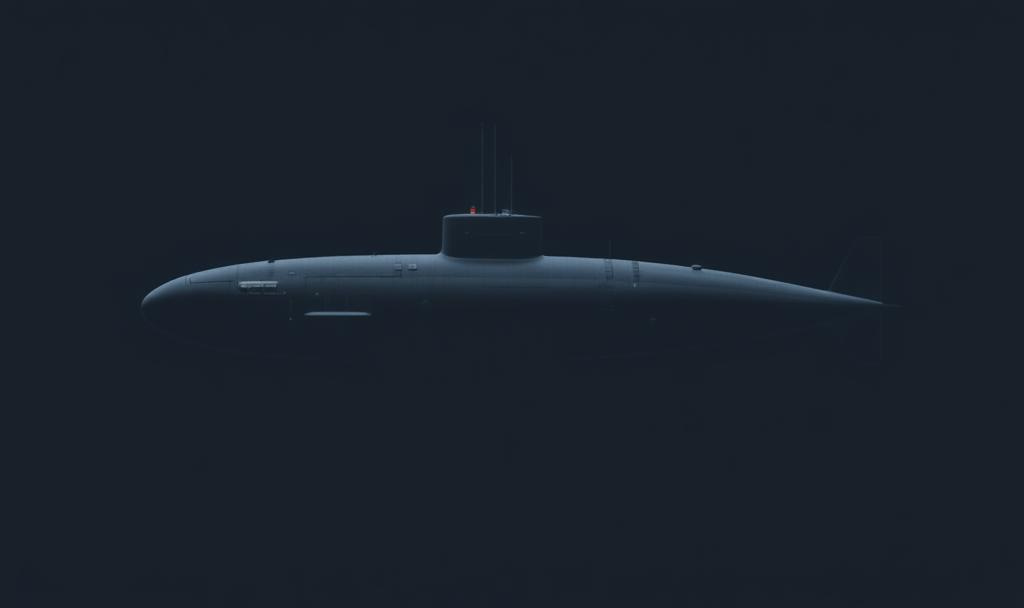
About The Drone
Purpose-built minelayer: Unlike conventional submarines or ships, the AJX002 is tailored to carry and release mines, lowering the cost and risk of laying minefields.
Size and range: At 20m in length, its large battery capacity suggests an extended range of at least 1,000 nm.
Design trade-offs: The drone’s turning radius and limited agility mean it is less effective in confined waters (such as ports), but well-suited for deeper ocean deployments.
Payload: Though the exact number of mines it can carry is unknown, the vessel’s bulk suggests significant capacity.
Why It Matters
This development highlights a growing Chinese interest in asymmetric tools that can complicate U.S. and Taiwanese defense planning.
Blockade potential: Mines are among the most effective tools for enforcing a blockade. A fleet of underwater drones could lay minefields across the Taiwan Strait or even in deeper waters, targeting critical shipping lanes.
Cost advantage: Mines are cheap to deploy but extremely costly and time-consuming to clear. Even rumors of their presence can disrupt global shipping and spike insurance rates.
Escalation risks: Using underwater drones lowers political and human risks for China, making it more likely Beijing would deploy them in crises short of full-scale war.
Regional security: The AJX002 adds pressure on Taiwan and regional allies to invest more heavily in mine detection and underwater surveillance networks.
The AJX002 signals a shift in China’s maritime strategy. Investing in unmanned minelaying platforms is a new way for Beijing to apply pressure on Taiwan and potentially disrupt one of the world’s busiest shipping lanes. In any potential future conflict over Taiwan, laying mines will probably play a key role, and the AJX002 allows Beijing a way to plant mines discreetly.
While questions remain about its readiness and effectiveness, the mere existence of this drone will likely force Taiwan, the U.S., and regional allies to adjust their naval planning.
Interesting read. Thanks for writing. I didnt know mines were this big a danger. Why is it dangerous to deploy them manually that a drone is more useful?
Also, do you think this is a first of its kind drone? Considering the number of countries interested in hurting international trade, wonder why mines (inc manually deployed) weren't used by those groups?